
Bethyl Laboratories
Rabbit anti-Human Kappa Light Chain Antiserum
Antisera
Catalog #A80-111
TargetHuman Kappa Light Chain
HostRabbit
ClonalityPolyclonal
ReactivityHuman
ApplicationDD, IEP

local_shipping
Order within 8 hours and 30 minutes for shipment by Tuesday, November 24
Product Description
The kappa light chain is a component of an Ig molecule that typically forms an Ig molecule linking to a heavy chain. The human body makes both kappa and lambda light chains, and elevated kappa levels may suggest disorders such as amyloidosis or multiple myeloma.
Specifications
Clonality
Polyclonal
Host
Rabbit
Isotype
IgG
Reactivity
Human
Format
Whole IgG
Conjugate Type
Unconjugated
Purity
Antiserum
Product Information
Applications
DD, IEP
Buffer
Serum containing 0.09% Sodium Azide
Storage Conditions
2 - 8 °C
Physical State
Liquid
Shelf Life
2 years from date of receipt
Country of Origin
USA
Production & Epitope
Antiserum was solid phase adsorbed to ensure specificity.
By immunoelectrophoresis this antibody reacts specifically with kappa light chains common to all human immunoglobulins. No antibody was detected against lambda light chain or non-immunoglobulin serum proteins. This antibody may cross react with kappa light chain from other species.
Applications
Not all listed applications have been specifically tested by our laboratory.
For use in precipitin gel reactions (e.g. immunoelectrophoresis (IEP) or double diffusion Ouchterlony (DD)).
Optimal working dilutions should be determined experimentally by the investigator.
Double Diffusion Ouchterlony (DD)Neat
Immunoelectrophoresis (IEP)Neat
Documents
Safety Data SheetPDF · A80-111Open
Product DatasheetPDF · A80-111 · Lot 3 (current lot)Open
Citations / Publications
Related Products
Services
Antibody Conjugation
Antibody and conjugate formats developed together, built to your specification.
Request Customization
Custom Monoclonal Antibody Discovery Services
Full custom monoclonal development, from immunization through validation.
Explore Monoclonal Development
VHH Discovery
Single-domain antibodies for structurally difficult targets a conventional monoclonal can't reach.
Explore VHH Discovery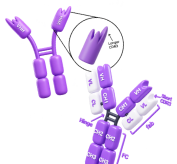
Resources

Standard Western Blot Protocol
Read the Protocol
Immunoprecipitation Protocol
Read the Protocol
Simple Western™ Resources
Explore Simple Western™
1