
Bethyl Laboratories
Human ApoE
Antigen Proteins
Catalog #P81-118-0.1MG

local_shipping
Order within 15 hours and 22 minutes for shipment by Tuesday, November 24
Product Description
Apo E contains 299 amino acid residues. It is a 34-37 kDa glycosylated protein (Rall et al., 1983). Apo E is involved with triglyceride, phospholipid, cholesteryl ester, and cholesterol transport in and out of cells and is a ligand for LDL receptors. Apo E has also been implicated in immune and nerve degeneration. It has been found to suppress lymphocyte proliferation. Late-onset familial and sporadic Alzheimer disease patients have been found to have a higher occurrence of one of the three common Apo E isoforms, Apo E4. The Apo E4 isoform has been detected in senile plaques and neurofibrillary tangles of Alzheimer disease patients. Apo E4 is associated with rapid chylomicron-remnant clearance and increased total cholesterol levels.
Specifications
Species
Human
Epitope Tag
None
Conjugate Type
Unconjugated
Purity
Purified
Concentration
900 µg/ml
Target Identity
Gene ID348
Gene Symbol
APOE
Gene Name
apolipoprotein E
Uniprot IDP02649
Protein Name
Apolipoprotein E
Alternate Names
AD2 • APO-E • ApoE4 • apolipoprotein E • apolipoprotein E3 • LDLCQ5 • LPG
Product Information
Buffer
20 mM Tris-HCl, 0.15 M NaCl, 0.5 mM EDTA, 0.02% NaN3, pH 7.4
Storage Conditions
Store at -20 °C
Physical State
Liquid
Shelf Life
1 year from date of receipt
Country of Origin
USA
Documents
Safety Data SheetPDF · P81-118-0.1MGOpen
Product DatasheetPDF · P81-118-0.1MG · Lot 0 (current lot)Open
Safety Data SheetPDF · P81-118-0.1MGOpen
Product DatasheetPDF · P81-118-0.1MG · Lot 0 (current lot)Open
Related Products
Services
Antibody Conjugation
Antibody and conjugate formats developed together, built to your specification.
Request Customization
Custom Monoclonal Antibody Discovery Services
Full custom monoclonal development, from immunization through validation.
Explore Monoclonal Development
VHH Discovery
Single-domain antibodies for structurally difficult targets a conventional monoclonal can't reach.
Explore VHH Discovery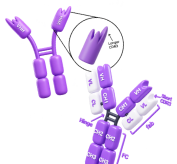
Resources

Standard Western Blot Protocol
Read the Protocol
Immunoprecipitation Protocol
Read the Protocol
Simple Western™ Resources
Explore Simple Western™
1