
Bethyl Laboratories
Rabbit anti-PELP1/MNAR IHC Antibody Affinity Purified
Primary
Catalog #IHC-00013
TargetPELP1/MNAR
HostRabbit
ClonalityPolyclonal
ReactivityMouse, Human
ApplicationIHC

Image 1 of 2
local_shipping
Order within 5 hours and 33 minutes for shipment by today
Product Description
PELP1/MNAR was identified as an SH2 domain interacting protein that interacts with Lck, c-Src, and other members of the Src kinase family. PELP1/MNAR appears to function as a general coregulator and interacts with multiple nuclear receptors and transcription factors. PELP1/MNAR has also been shown to participate in nongenomic signaling via an association with a multiprotein complex, the “signalsome” involving ERalpha, Src kinase, PI3K, SHC, and G-proteins. As a transcriptional coregulator and signaling protein, PELP/MNAR mediates a variety of cellular functions such as cell proliferation, apoptosis, differentiation, oncogenesis and metastasis.
Specifications
Clonality
Polyclonal
Host
Rabbit
Immunogen
Between 1000 and 1050
Isotype
IgG
Reactivity
Mouse, Human
Format
Whole IgG
Conjugate Type
Unconjugated
Purity
Antigen Affinity Purified
Concentration
250 µg/ml
Target Identity
TargetPELP1/MNAR
Antigen Species
Human
Gene ID27043
Gene Symbol
PELP1
Gene Name
proline, glutamate and leucine rich protein 1
Uniprot IDQ8IZL8
Protein Name
Proline-, glutamic acid- and leucine-rich protein 1
Product Information
Applications
IHC
Buffer
Tris-buffered Saline containing 0.1% BSA and 0.09% Sodium Azide
Storage Conditions
2 - 8 °C
Physical State
Liquid
Shelf Life
1 year from date of receipt
Country of Origin
USA
Production & Epitope
Antibody was affinity purified using an epitope specific to PELP1/MNAR immobilized on solid support.
The epitope recognized by IHC-00013 maps to a region between residue 1000 and 1050 of human proline-, glutamic acid-, leucine-rich protein 1/ modulator of nongenomic activity of estrogen receptor using the numbering given in entry AAN41255.1 (GeneID 27043).
Applications
Epitope exposure is recommended.
Epitope exposure with citrate buffer will enhance staining.
Likely to work with frozen sections.
In some cases, the antibody may be diluted further than indicated.
Immunohistochemistry (IHC)1:100 - 1:500
Documents
Safety Data SheetPDF · IHC-00013Open
Product DatasheetPDF · IHC-00013 · Lot 1 (current lot)Open
Product DatasheetPDF · IHC-00013 · Lot 1 (current lot)Open
Citations / Publications
Related Products
Services
Antibody Conjugation
Antibody and conjugate formats developed together, built to your specification.
Request Customization
Custom Monoclonal Antibody Discovery Services
Full custom monoclonal development, from immunization through validation.
Explore Monoclonal Development
VHH Discovery
Single-domain antibodies for structurally difficult targets a conventional monoclonal can't reach.
Explore VHH Discovery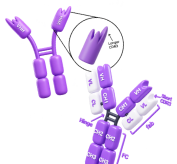
Resources

Standard Western Blot Protocol
Read the Protocol
Immunoprecipitation Protocol
Read the Protocol
Simple Western™ Resources
Explore Simple Western™
1