



Bethyl Laboratories
Mouse anti-CD57 Monoclonal Antibody [HNK-1]
Monoclonal Antibodies
Catalog #A500-027A
TargetCD57
HostMouse
CloneHNK-1
ReactivityHuman
ApplicationICC, IHC
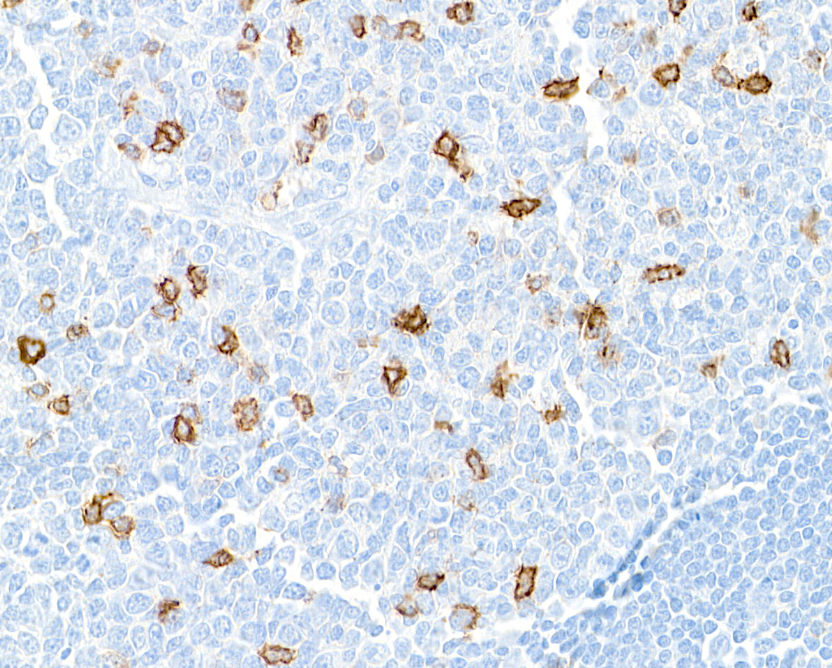
Image 1 of 3
local_shipping
Order within 10 hours and 15 minutes for shipment by Tuesday, November 24
Product Description
Cluster of Differentiation 57 (CD57), also known as NK-1, is an antigen detectable in natural killer cells, some T- lymphocytes and normal peripheral blood mononuclear cells, myeloid cells, and a variety of polypeptides, lipids, and chondroitin sulfate proteoglycans. Detection of CD57 by immunohistochemistry provides the information of CD57 expression level in testing tissue samples.
Specifications
Clonality
Monoclonal
Clone
HNK-1
Host
Mouse
Isotype
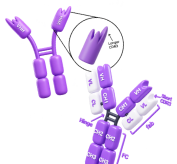
IgM
Reactivity
Human
Format
Whole IgM
Conjugate Type
Unconjugated
Purity
Purified
Concentration
250 µg/ml
Product Information
Applications
ICC, IHC
Buffer
Phosphate Buffered Saline (PBS) containing 0.2% BSA and 0.09% Sodium Azide
Storage Conditions
2 - 8 °C
Physical State
Liquid
Shelf Life
1 year from date of receipt
Country of Origin
USA
Production & Epitope
Monoclonal antibody was purified from cell culture supernatant.
Immunogen was a membrane extract of human lymphoblastoid cell line HSB-2.
Applications
Immunocytochemistry (ICC)1:100 to 1:500. Epitope retrieval with citrate buffer pH6.0 is recommended for FFPE cell sections.
Immunohistochemistry (IHC)1:100 to 1:500. Epitope retrieval with citrate buffer pH6.0 is recommended for FFPE tissue sections.
Documents
Product DatasheetPDF · A500-027A · Lot 1 (current lot)Open
Product DatasheetPDF · A500-027A · Lot 1 (current lot)Open
Product DatasheetPDF · A500-027A · Lot 201110Open
Safety Data SheetPDF · A500-027AOpen
Services
Antibody Conjugation
Antibody and conjugate formats developed together, built to your specification.
Request CustomizationCustom Monoclonal Antibody Discovery Services
Full custom monoclonal development, from immunization through validation.
Explore Monoclonal DevelopmentVHH Discovery
Single-domain antibodies for structurally difficult targets a conventional monoclonal can't reach.
Explore VHH DiscoveryResources



1