



Bethyl Laboratories
Mouse anti-Granzyme B Monoclonal Antibody [BLGM085]New
Primary
Catalog #A501-085
TargetGranzyme B
HostMouse
CloneBLGM085
ReactivityHuman
ApplicationIHC
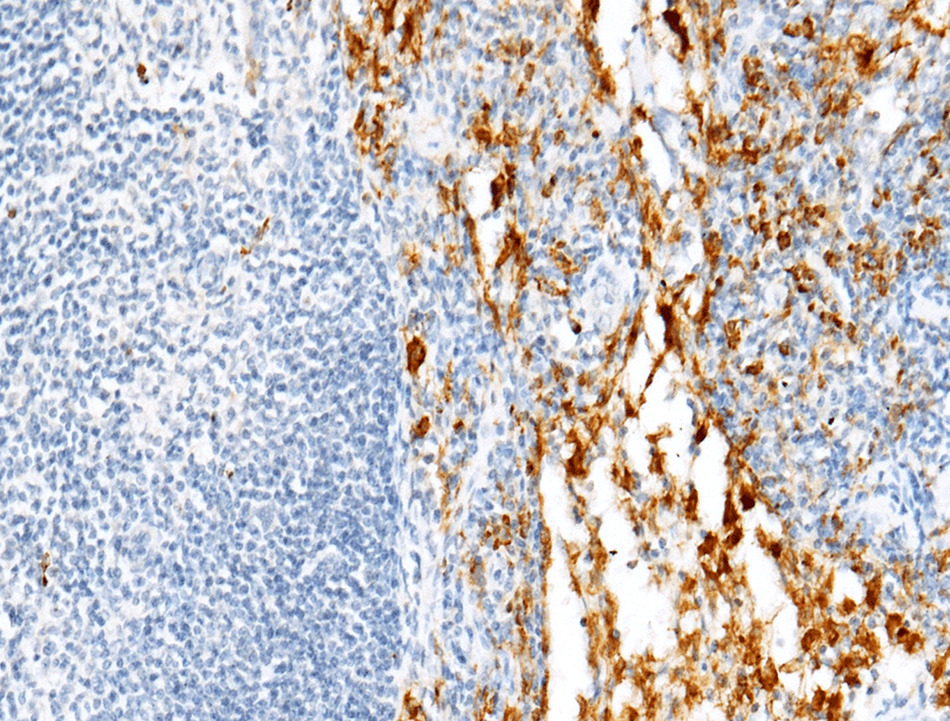
Image 1 of 1
local_shipping
This item has an estimated lead time of two weeks.
Product Description
Granzyme B is a member of the granzyme subfamily of proteins, part of the peptidase S1 family of serine proteases. The preproprotein is secreted by natural killer (NK) cells and cytotoxic T lymphocytes (CTLs) and proteolytically processed to generate the active protease, which induces target cell apoptosis. This protein also processes cytokines and degrades extracellular matrix proteins, and these roles are implicated in chronic inflammation and wound healing [taken from NCBI Entrez Gene (Gene ID: 3002)]
Specifications
Clonality
Monoclonal
Clone
BLGM085
Host
Mouse
Isotype
IgG2a
Reactivity
Human
Format
Whole IgG
Conjugate Type
Unconjugated
Purity
Purified
Target Identity
TargetGranzyme B
Antigen Species
Human
Gene ID3002
Gene Symbol
GZMB
Gene Name
granzyme B
Uniprot IDP10144
Protein Name
Granzyme B
Alternate Names
C11 • cathepsin G-like 1 • CCPI • CGL1 • CGL-1 • CSPB • CSP-B • CTLA1 • CTLA-1 • CTSGL1 • cytotoxic serine protease B • cytotoxic T-lymphocyte proteinase 2 • fragmentin 2 • Fragmentin-2 • granzyme B • granzyme B (granzyme 2, cytotoxic T-lymphocyte-associated serine esterase 1) • Granzyme-2 • HLP • human lymphocyte protein • Lymphocyte protease • SECT • T-cell serine protease 1-3E
Product Information
Applications
IHC
Buffer
Tris-buffered Saline with 1% BSA and <0.1% Sodium Azide
Storage Conditions
2 - 8 °C
Physical State
Liquid
Shelf Life
1 year from date of receipt
Country of Origin
USA
Applications
Immunohistochemistry (IHC)1:100 to 1:400
Documents
Product DatasheetPDF · A501-085 · Lot 1 (current lot)Open
Product DatasheetPDF · A501-085 · Lot 1 (current lot)Open
Safety Data SheetPDF · A501-085Open
Services
Antibody Conjugation
Antibody and conjugate formats developed together, built to your specification.
Request CustomizationCustom Monoclonal Antibody Discovery Services
Full custom monoclonal development, from immunization through validation.
Explore Monoclonal DevelopmentVHH Discovery
Single-domain antibodies for structurally difficult targets a conventional monoclonal can't reach.
Explore VHH DiscoveryResources



1