



Bethyl Laboratories
Mouse anti-UCHL1 Monoclonal Antibody [BLGM150]New
Primary
Catalog #A501-150
TargetUCHL1
HostMouse
CloneBLGM150
ReactivityHuman
ApplicationIHC
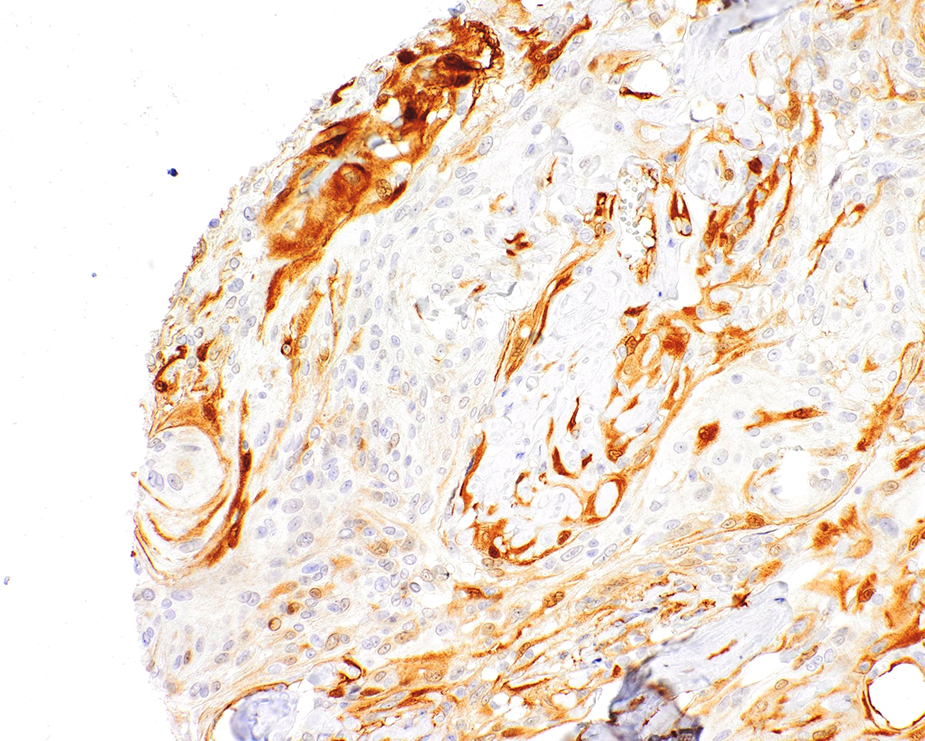
Image 1 of 1
local_shipping
This item has an estimated lead time of two weeks.
Product Description
Ubiquitin carboxyl-terminal hydrolase isozyme L1, or UCHL1, is a ubiquitin-protein hydrolase belonging to the peptidase C12 family. It hydrolyzes a peptide bond at the C-terminal glycine of ubiquitin. UCHL1 is specifically expressed in neurons and in cells of the diffuse neuroendocrine system. [taken from NCBI Entrez Gene (Gene ID: 7345)].
Specifications
Clonality
Monoclonal
Clone
BLGM150
Host
Mouse
Isotype
IgG2b
Reactivity
Human
Format
Whole IgG
Conjugate Type
Unconjugated
Purity
Purified
Target Identity
TargetUCHL1
Antigen Species
Human
Gene ID7345
Gene Symbol
UCHL1
Gene Name
ubiquitin C-terminal hydrolase L1
Uniprot IDP09936
Protein Name
Ubiquitin carboxyl-terminal hydrolase isozyme L1
Alternate Names
epididymis luminal protein 117 • epididymis secretory protein Li 53 • HEL-117 • HEL-S-53 • NDGOA • neuron cytoplasmic protein 9.5 • PARK5 • PGP 9.5 • PGP9.5 • PGP95 • SPG79 • ubiquitin carboxyl-terminal esterase L1 (ubiquitin thiolesterase) • ubiquitin carboxyl-terminal hydrolase isozyme L1 • ubiquitin thioesterase L1 • ubiquitin thiolesterase • Uch-L1
Product Information
Applications
IHC
Buffer
Tris-buffered Saline with 1% BSA and <0.1% Sodium Azide
Storage Conditions
2 - 8 °C
Physical State
Liquid
Shelf Life
1 year from date of receipt
Country of Origin
USA
Applications
Immunohistochemistry (IHC)1:50 to 1:200
Documents
Product DatasheetPDF · A501-150 · Lot 1 (current lot)Open
Product DatasheetPDF · A501-150 · Lot 1 (current lot)Open
Safety Data SheetPDF · A501-150Open
Services
Antibody Conjugation
Antibody and conjugate formats developed together, built to your specification.
Request CustomizationCustom Monoclonal Antibody Discovery Services
Full custom monoclonal development, from immunization through validation.
Explore Monoclonal DevelopmentVHH Discovery
Single-domain antibodies for structurally difficult targets a conventional monoclonal can't reach.
Explore VHH DiscoveryResources



1