



Bethyl Laboratories
Rabbit anti-Cytokeratin 20 Recombinant Monoclonal Antibody [BLGR035]New
Primary
Catalog #A701-035
TargetCytokeratin 20
HostRabbit
CloneBLGR035
ReactivityHuman
ApplicationIHC
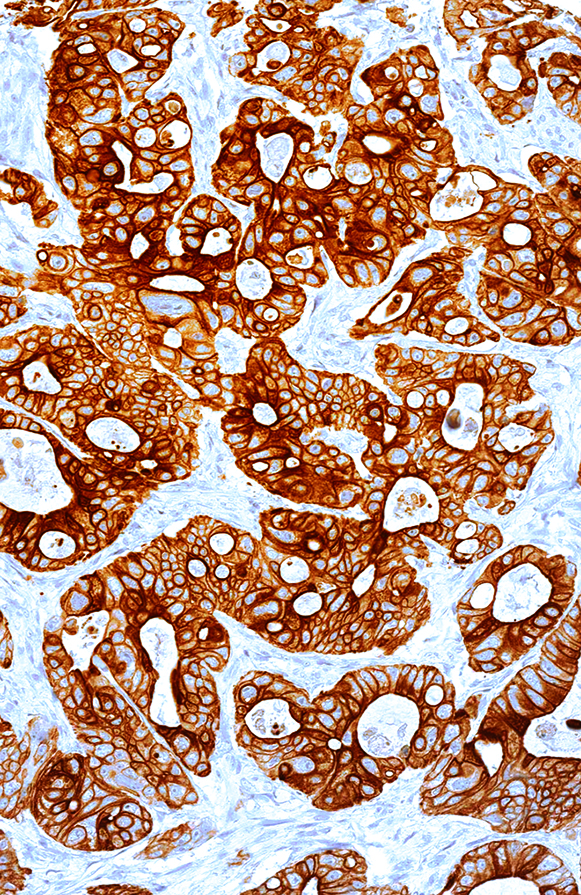
Image 1 of 1
local_shipping
This item has an estimated lead time of two weeks.
Product Description
Cytokeratin 20 is a member of the keratin family of intermediate filament proteins responsible for the structural integrity of epithelial cells. Cytokeratin 20 is a type I cytokeratin, acidic proteins which are arranged in pairs of heterotypic keratin chains. This cytokeratin is a major cellular protein of mature enterocytes and goblet cells and is specifically expressed in the gastric and intestinal mucosa. [taken from NCBI Entrez Gene (Gene ID: 54474)].
Specifications
Clonality
Recombinant Monoclonal
Clone
BLGR035
Host
Rabbit
Isotype
IgG
Reactivity
Human
Format
Whole IgG
Conjugate Type
Unconjugated
Purity
Purified
Target Identity
TargetCytokeratin 20
Antigen Species
Human
Gene ID54474
Gene Symbol
KRT20
Gene Name
keratin 20
Uniprot IDP35900
Protein Name
Keratin, type I cytoskeletal 20
Alternate Names
CD20 • CK20 • CK-20 • cytokeratin 20 • Cytokeratin-20 • K20 • keratin 20, type I • keratin, type I cytoskeletal 20 • Keratin-20 • KRT21 • protein IT
Product Information
Applications
IHC
Buffer
Tris-buffered Saline with 1% BSA and <0.1% Sodium Azide
Storage Conditions
2 - 8 °C
Physical State
Liquid
Shelf Life
1 year from date of receipt
Country of Origin
USA
Applications
Immunohistochemistry (IHC)1:50 to 1:200
Documents
Product DatasheetPDF · A701-035 · Lot 1 (current lot)Open
Product DatasheetPDF · A701-035 · Lot 1 (current lot)Open
Safety Data SheetPDF · A701-035Open
Services
Antibody Conjugation
Antibody and conjugate formats developed together, built to your specification.
Request CustomizationCustom Monoclonal Antibody Discovery Services
Full custom monoclonal development, from immunization through validation.
Explore Monoclonal DevelopmentVHH Discovery
Single-domain antibodies for structurally difficult targets a conventional monoclonal can't reach.
Explore VHH DiscoveryResources



1