



Bethyl Laboratories
Rabbit anti-IDO1 Recombinant Monoclonal Antibody [BLGR050]New
Primary
Catalog #A701-050
TargetIDO1
HostRabbit
CloneBLGR050
ReactivityHuman
ApplicationIHC
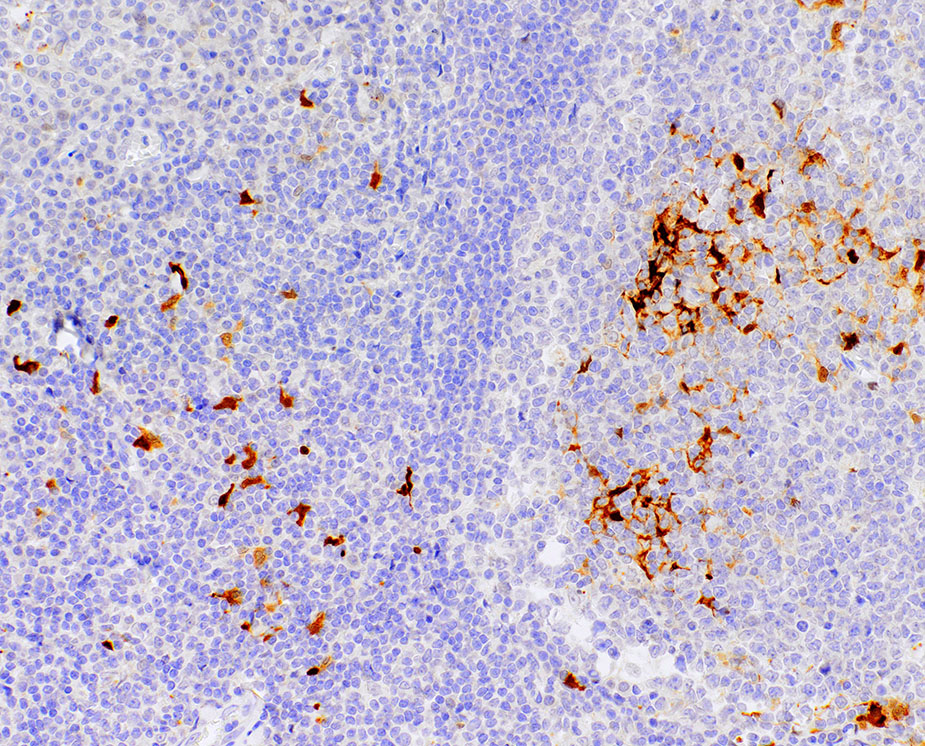
Image 1 of 1
local_shipping
This item has an estimated lead time of two weeks.
Product Description
Indoleamine 2,3-dioxygenase (IDO1) is a heme enzyme that catalyzes the first and rate-limiting step in tryptophan catabolism to N-formyl-kynurenine. IDO1 acts on multiple tryptophan substrates including D-tryptophan, L-tryptophan, 5-hydroxy-tryptophan, tryptamine, and serotonin. It is thought to play a role in a variety of pathophysiological processes such as antimicrobial and antitumor defense, neuropathology, immunoregulation, and antioxidant activity. Through its expression in dendritic cells, monocytes, and macrophages this enzyme modulates T-cell behavior by its peri-cellular catabolization of the essential amino acid tryptophan [taken from NCBI Entrez Gene (Gene ID: 3620)].
Specifications
Clonality
Recombinant Monoclonal
Clone
BLGR050
Host
Rabbit
Isotype
IgG
Reactivity
Human
Format
Whole IgG
Conjugate Type
Unconjugated
Purity
Purified
Target Identity
TargetIDO1
Antigen Species
Human
Gene ID3620
Gene Symbol
IDO1
Gene Name
indoleamine 2,3-dioxygenase 1
Uniprot IDP14902
Protein Name
Indoleamine 2,3-dioxygenase 1
Alternate Names
Product Information
Applications
IHC
Buffer
Tris-buffered Saline with 1% BSA and <0.1% Sodium Azide
Storage Conditions
2 - 8 °C
Physical State
Liquid
Shelf Life
1 year from date of receipt
Country of Origin
USA
Applications
Immunohistochemistry (IHC)1:50 to 1:200
Documents
Product DatasheetPDF · A701-050 · Lot 1 (current lot)Open
Product DatasheetPDF · A701-050 · Lot 1 (current lot)Open
Safety Data SheetPDF · A701-050Open
Services
Antibody Conjugation
Antibody and conjugate formats developed together, built to your specification.
Request CustomizationCustom Monoclonal Antibody Discovery Services
Full custom monoclonal development, from immunization through validation.
Explore Monoclonal DevelopmentVHH Discovery
Single-domain antibodies for structurally difficult targets a conventional monoclonal can't reach.
Explore VHH DiscoveryResources



1