
Bethyl Laboratories
Rabbit anti-XPF/ERCC4 IHC Antibody Affinity Purified
Primary
Catalog #IHC-00263
TargetXPF/ERCC4
HostRabbit
ClonalityPolyclonal
ReactivityHuman
ApplicationIHC

Image 1 of 1
local_shipping
Order within 9 hours and 34 minutes for shipment by today
Product Description
XPF/ERCC4 is suggested to play a role in the repair of DNA double-strand breaks (DSB), homologous recombination, and gene conversion via single-strand annealing (SSA). XPF/ERCC4 is an endonuclease that incises 5-prime DNA. Defects in XPF/ERCC4 cause xeroderma pigmentosum VI (XP6) an autosomal recessive disease characterized by hypersensitivity to sunlight and a predisposition to skin cancer as well as neurological abnormalities. Defects in XPF/ERCC4 are also responsible for XFE progeroid syndrome, a syndrome characterized by dwarfism, cachexia, and microcephaly.
Specifications
Clonality
Polyclonal
Host
Rabbit
Immunogen
Between 866 and C-terminus
Isotype
IgG
Reactivity
Human
Format
Whole IgG
Conjugate Type
Unconjugated
Purity
Antigen Affinity Purified
Concentration
250 µg/ml
Target Identity
TargetXPF/ERCC4
Antigen Species
Human
Gene ID2072
Gene Symbol
ERCC4
Gene Name
ERCC excision repair 4, endonuclease catalytic subunit
Uniprot IDQ92889
Protein Name
DNA repair endonuclease XPF
Alternate Names
DNA excision repair protein ERCC-4 • DNA repair endonuclease XPF • DNA repair protein complementing XP-F cells • ERCC11 • excision repair cross-complementation group 4 • excision repair cross-complementing rodent repair deficiency, complementation group 4 • excision-repair, complementing defective, in Chinese hamster • FANCQ • RAD1 • xeroderma pigmentosum group F-complementing protein • xeroderma pigmentosum, complementation group F • XFEPS • XPF
Product Information
Applications
IHC
Buffer
Tris-buffered Saline containing 0.1% BSA and 0.09% Sodium Azide
Storage Conditions
2 - 8 °C
Physical State
Liquid
Shelf Life
1 year from date of receipt
Country of Origin
USA
Production & Epitope
Antibody was affinity purified using an epitope specific to XPF/ERCC4 immobilized on solid support.
The epitope recognized by IHC-00263 maps to a region between residue 855 and 905 of human xeroderma pigmentosum, complementation group F (excision repair cross-complementing rodent repair deficiency, complementation group 4) using the numbering given in entry AAB07689.1 (GeneID 2072).
Immunoglobulin concentration was determined using Beer’s Law where 1mg/mL IgG has an A280 of 1.4.
Applications
Epitope exposure is recommended.
Epitope exposure with citrate buffer will enhance staining.
Likely to work with frozen sections.
In some cases, the antibody may be diluted further than indicated.
Immunohistochemistry (IHC)1:100 - 1:500
Documents
Safety Data SheetPDF · IHC-00263Open
Product DatasheetPDF · IHC-00263 · Lot 1 (current lot)Open
Product DatasheetPDF · IHC-00263 · Lot 1 (current lot)Open
Citations / Publications
Related Products
Services
Antibody Conjugation
Antibody and conjugate formats developed together, built to your specification.
Request Customization
Custom Monoclonal Antibody Discovery Services
Full custom monoclonal development, from immunization through validation.
Explore Monoclonal Development
VHH Discovery
Single-domain antibodies for structurally difficult targets a conventional monoclonal can't reach.
Explore VHH Discovery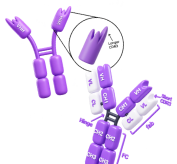
Resources

Standard Western Blot Protocol
Read the Protocol
Immunoprecipitation Protocol
Read the Protocol
Simple Western™ Resources
Explore Simple Western™
1